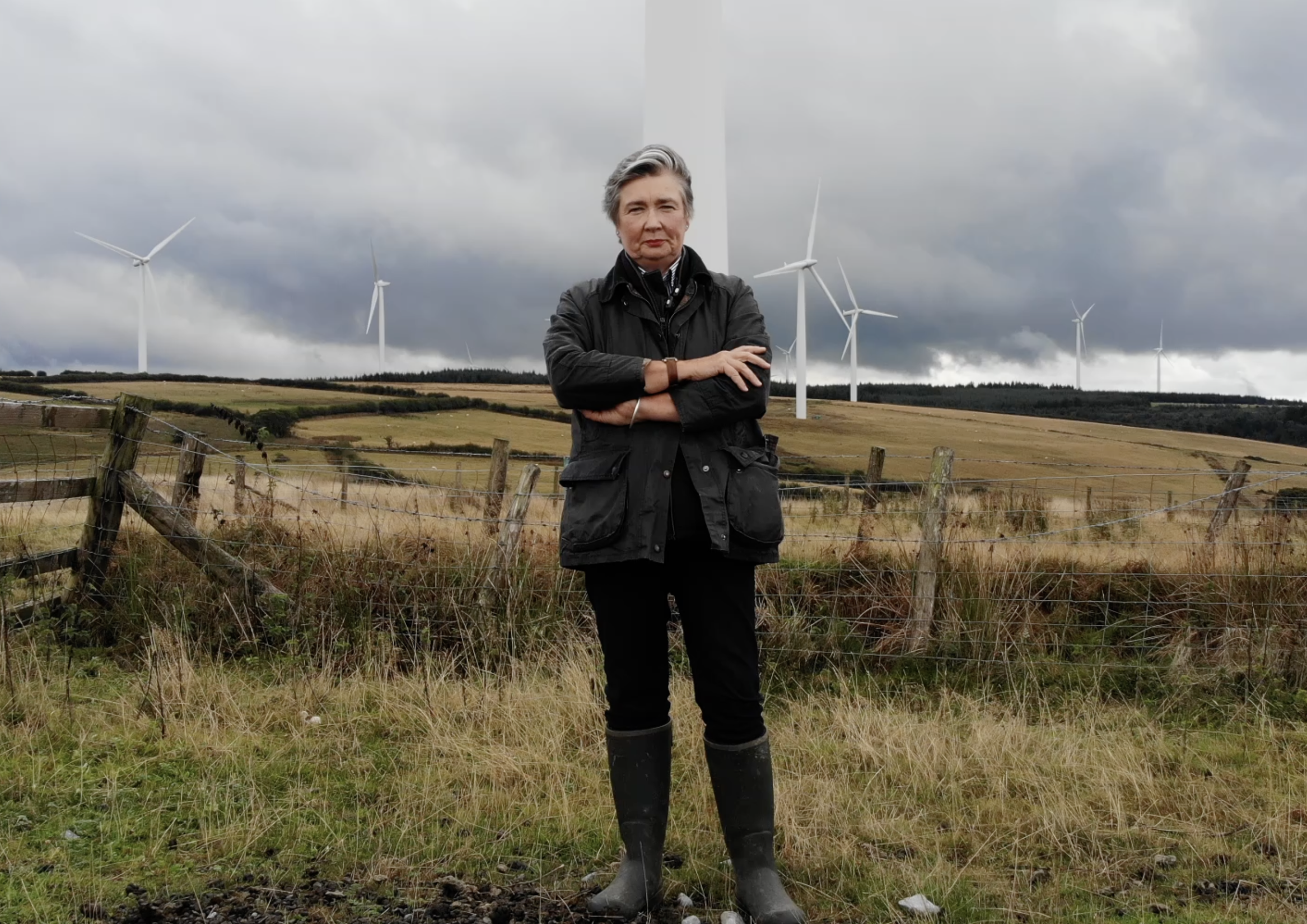
Sarah Edwards, pictured at Brechfa Wind Farm – photo by Oliver Latimir
Sarah Edwards, Member of the Senedd for Carmarthenshire and one of Reform Wales’ representatives for the county, is calling for far greater scrutiny of renewable energy companies operating in Carmarthenshire, proper risk and impact assessments for major developments such as the wind farm proposals at Brechfa Forest and Glyn Cothi, and a serious plan for how ageing turbines will be disposed of once they reach the end of their working life.
Sarah Edwards says the rush to build ever more onshore wind capacity in rural Wales has not been matched by the oversight residents have a right to expect.
“Nobody in my office is against clean energy,” said Sarah Edwards MS. “What I am against is rural Carmarthenshire being treated as an easy site for development with none of the scrutiny that would be applied anywhere else. If a company wants to put dozens of turbines on our hillsides, this community deserves proper answers on the risks, not just the promises.”
Full risk and impact assessments, not just ecology surveys
Sarah Edwards is calling for any major renewable development in the county, including the proposed Glyn Cothi Wind Farm in Brechfa Forest, to be subject to full risk and impact assessments covering not only wildlife and habitat, but the sectors that keep rural Carmarthenshire’s economy running: tourism, agriculture and local business.
“Ecological surveys matter, and so they should,” said Sarah Edwards MS. “But a development of this scale also needs to be weighed against what it could mean for the farmers working that land, the businesses that rely on people visiting this county for its landscape, and the communities who live with the consequences long after the consultation events are over. At the moment, developers set the terms of that conversation. That needs to change.”
Scrutiny of the companies, not just the sites
Sarah Edwards is also calling for tighter scrutiny of the renewable energy companies themselves, including the standards applied to imported components and equipment.
That call follows recent reporting that asbestos-containing brake components, sourced from a Chinese supplier, have been found in the lift and hoist systems of around 1,000 wind turbines across the UK. Industry figures have said the asbestos identified is sealed within brake housings and testing has so far found no airborne risk to the public, with the concern centred on the safety of maintenance workers who access this equipment. The GMB union has written to the UK government calling for a full account of the clean-up operation.
“This is exactly why scrutiny matters,” said Sarah Edwards MS. “A supply chain that lets a banned substance like asbestos into modern infrastructure without anyone catching it before installation is a supply chain that has not been properly checked. Wind turbines being marketed as a clean, modern solution does not mean the companies building them get a free pass on basic safety and compliance. If we are going to build this much infrastructure this quickly, the vetting of who is building it, and what it is built from, has to keep up.”
A plan for the end of the working life, not just the beginning
Sarah Edwards is also calling for proper, published research into how wind turbines will be disposed of once they are decommissioned, rather than leaving that question to be answered decades from now.
Turbine towers, gearboxes and generators are largely recyclable, but the blades are made from composite materials that are notoriously difficult to break down, and industry figures suggest hundreds of thousands of tonnes of blade material are still going to landfill globally each year. The European wind industry has only just committed, from January 2026, to stop sending blades to landfill at all.
“We are being asked to accept turbines going up across our hillsides for the next twenty or thirty years without a clear, funded answer to what happens when they come down,” said Sarah Edwards MS. “That is not a small technical detail, it is a basic question of due diligence, and it should be answered properly before consent is granted, not left as somebody else’s problem for the 2050s.”
What Sarah Edwards MS is asking for
Sarah Edwards, representing the Reform UK Wales Group in Carmarthenshire, is calling on developers and the Welsh Government to commit to:
- Full risk and impact assessments for major renewable projects covering tourism, agriculture and local business, not only ecology
- Independent scrutiny of the safety and compliance standards applied to imported turbine components
- A published, funded plan for the recycling or disposal of turbines and blades at the end of their working life, agreed before consent is granted
- Genuine representation of rural communities’ interests throughout the planning process, not consultation after key decisions have already been made
Discover more from Reform Wales - Carmarthenshire
Subscribe to get the latest posts sent to your email.